
1000 Most Common Chinese Words For Beginners – Lesson 43
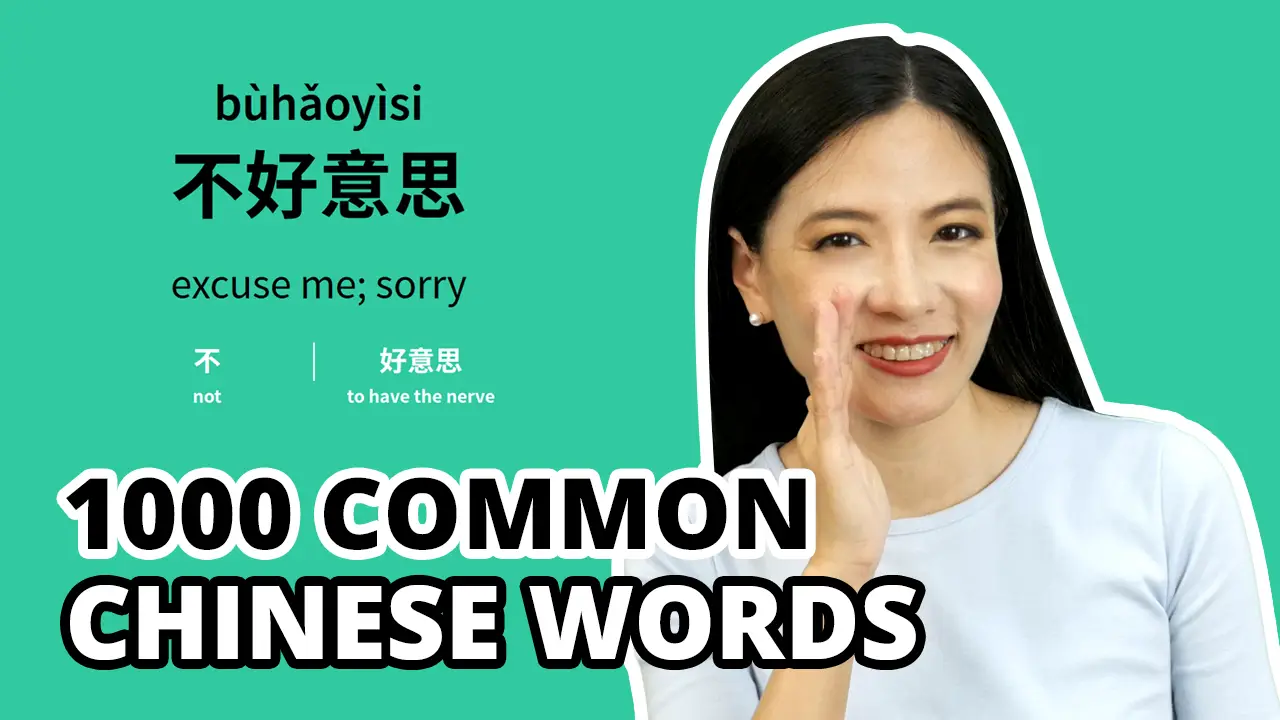
1000 Most Common Chinese Words For Beginners: Lesson 43
In this 43rd lesson of our "1000 Most Common Chinese Words For Beginners" Course, we will learn another group of the 1000 Most Common Chinese Words, which contains the following 20 words and phrases that are very useful for daily Chinese conversations:
- 就 jiù ▸ adv. then
- 如果 rúguǒ ▸ conj. if
- 春夏秋冬 chūn xià qiū dōng ▸ n. phr. spring, summer, autumn (and) winter
- 才 cái ▸ adv. "as late as" [indicating an action or event happens or ends late]
- 说不定 shuōbudìng ▸ maybe; perhaps; to be uncertain
- 水平 shuǐpíng ▸ n. level (reached in production, life, politics, ideology, culture, art, technology, business, etc.)
- 动作 dòngzuò ▸ n. movement; action; motion
- 动 dòng ▸ v. to move
- 搬 bān ▸ v. to move (sth.)
- 寄 jì ▸ v. to send by mail
- 歌 gē ▸ n. song
- 护士 hùshi ▸ n. nurse
- 另外 lìngwài ▸ pron. other; another
- 开心 kāixīn ▸ adj. happy
- 参观 cānguān ▸ v. to visit and do field observation (of work performance, career, facilities, historical sites, etc.)
- 表演 biǎoyǎn ▸ v. to perform (drama, dance, acrobatics, etc.)
- 送给 sòng gěi ▸ v.-prep. phr. to present to; to give as a gift to
- 中间 zhōngjiān ▸ n. center; middle; interspace
- 强 qiáng ▸ adj. strong; powerful
- 弱 ruò ▸ adj. weak
VOCABULARY USAGE
1.
就 jiù
adv. ▸ then
EXAMPLE SENTENCES
- Lèi le jiù zǎo diǎn xiūxi ba!
累了就早点休息吧!
Tired -le then early “dian” rest -ba!
(You are) tired (already) then rest “a little bit” earlier! - Xǐhuan dehuà jiù mǎi huíqu ba!
喜欢的话就买回去吧!
Like “dehua” then buy return-go -ba!
If (you) like (it) then buy (it) back!
2.
如果 rúguǒ
conj. ▸ if
EXAMPLE SENTENCES
- Rúguǒ méiyǒu biéde shì, wǒ jiù xiān zǒu le.
如果没有别的事,我就先走了。
“Little-friend”, you this-year which-number year?
Child, how-old (are) you this-year? - Rúguǒ tā jùjué wǒ, wǒ zěnmebàn?
如果她拒绝我,我怎么办?
He daughter which-number year -le?
How-old (is) his daughter (now)?
3.
春夏秋冬 chūn xià qiū dōng
n. phr. ▸ spring, summer, autumn (and) winter
EXAMPLE SENTENCES
- Yì nián yǒu chūn xià qiū dōng sì ge jìjié.
一年有春夏秋冬四个季节。
One year have spring-summer-autumn-winter four “ge” seasons.
A year has (the) four “ge” (of) seasons (that are) spring, summer, autumn (and) winter. - Zhège dìfang chūn xià qiū dōng dōu hěn nuǎnhuo.
这个地方春夏秋冬都很暖和。
This “ge” place spring-summer-autumn-winter all very warm.
This “ge” (of) place (-) spring, summer, autumn (and) winter (are) all very warm.
4.
才 cái
adv. ▸ "as late as" [indicating an action or event happens or ends late]
EXAMPLE SENTENCES
- Tā yào zài gōngzuò wǔ nián cái néng tuìxiū.
他要再工作五年才能退休。
He additionally need-to moreover work 5 years “as late as” can retire.
He additionally need-to moreover work “as late as” 5 years to-be-able-to retire. - Wǒ jīntiān wǎngshang qī diǎn guò cái xiàbān.
我今天晚上七点过才下班。
I today evening 7 o’clock past “as late as” get-off-work.
I today evening got-off-work “as late as” past 7 o’clock.
5.
说不定 shuōbudìng
maybe; perhaps; to be uncertain
EXAMPLE SENTENCES
- Zhè jiàn shì shuōbudìng tā hái bù zhīdào.
这件事说不定他还不知道。
This “jian” thing perhaps he still not know.
This “jian” (of) thing (-) perhaps he still (does) not know (about it). - Zhège diànyǐng búcuò, shuōbudìng nǐ huì xǐhuan.
这个电影不错,说不定你会喜欢。
This “bu” movie not bad, maybe you will like.
This “bu” (of) movie (is) not bad, maybe you will like (it).
6.
水平 shuǐpíng
n. ▸ level (reached in production, life, politics, ideology, culture, art, technology, business, etc.)
EXAMPLE SENTENCES
- Wǒ de Hànyǔ shuǐpíng bǐ yǐqián jìnbù le hěn duō.
我的汉语水平比以前进步了很多。
My Chinese level “compared with” before improve -le very much.
My Chinese level “compared with” before (has) improved very much. - Nǐ duì zhè fèn gōngzuò de gōngzī shuǐpíng mǎnyì ma?
你对这份工作的工资水平满意吗?
You towards this “fen” job -de- salary level be-satisfied -ma?
Are you satisfied towards (the) salary level of this “fen” (of) job?
7.
动作 dòngzuò
n. ▸ movement; action; motion
EXAMPLE SENTENCES
- Tiàowǔ de shíhou, wǒ zǒngshì zuò bu hǎo zhège dòngzuò.
跳舞的时候,我总是做不好这个动作。
Dance -de time, I always do-not-good this “ge” movement.
(At the) time (of) dancing, I always cannot-do-good this “ge” (of) move. - Wǒ xǐhuan diànyǐng li de màn dòngzuò.
我喜欢电影里的慢动作。
I like movie-inside -de- slow motion.
I like slow motion in movies.
8.
动 dòng
v. ▸ to move
EXAMPLE SENTENCES
- Tā gāng zuò wán shǒushù, hái dòng bu liǎo.
他刚做完手术,还动不了。
He just do-finish surgery, still move-not-“liao”.
He just finished-(being)-done (a) surgery, (and) still cannot-move. - Tā zuò zài nàlǐ bú dòng, hǎoxiàng shuìzháo le.
他坐在那里不动,好像睡着了。
He sit “zai” there not move, as-if sleep-“zhao” -le.
He sits there not moving, as-if (he has) fallen-asleep.
9.
搬 bān
v. ▸ to move (sth.)
EXAMPLE SENTENCES
- Wǒ xià ge yuè yào bānjiā le.
我下个月要搬家了。
I next “ge” month intend to move-home -le.
I next “ge” (of) month intend to move. - Bāng wǒ bān yíxià zhè zhāng zhuōzi ba!
帮我搬一下这张桌子吧!
Help me move one “xia” this “zhang” table -ba!
Help me move this “zhang” (of) table “really quick”!
10.
寄 jì
v. ▸ to send by mail
EXAMPLE SENTENCES
- Wǒ jì le yìxiē chīde gěi nǐ.
我寄了一些吃的给你。
I send -le some eat-de to you.
I (have) sent some things-to-eat to you. - Wǒ qù jì yí ge kuàidì.
我去寄一个快递。
I go send one “ge” express-delivery.
I (will) go send one “ge” (of) express-delivery.
11.
歌 gē
n. ▸ song
EXAMPLE SENTENCES
- Nǐ xǐhuan tīng shéi de gē?
你喜欢听谁的歌?
You like listen to who -de- songs?
Whose songs (do) you like listening to? - Chàng shǒu gē gěi wǒ tīng ba!
唱首歌给我听吧!
Sing “shou” song to me listen -ba!
Sing (one) “shou” (of) song to me to listen to!
12.
护士 hùshi
n. ▸ nurse
EXAMPLE SENTENCES
- Wǒ jiějie shì yì míng hùshi.
我姐姐是一名护士。
My big-sister is one “ming” nurse.
My big-sister is one “ming” (of) nurse. - Jīntiān hùshi gěi nǐ dǎzhēn le ma?
今天护士给你打针了吗?
Today nurse for you do-injection -le -ma?
Today (has the) nurse done-injection for you (already)?
13.
另外 lìngwài
pron. ▸ other; another
EXAMPLE SENTENCES
- Zhè tiáo lù tài dǔ le, wǒmen zǒu lìngwài nà tiáo ba!
这条路太堵了,我们走另外那条吧!
This “tiao” road too congested, we walk other that “tiao” -ba!
This “tiao” (of) road (is) too congested, (let) us take that other “tiao” (of road)! - Wǒmen yǐjīng yǒu sān ge rén le, lìngwài liǎng ge hái méi lái.
我们已经有三个人了,另外两个还没来。
We already have 3 “ge” persons -le, another 2 “ge” still not arrive.
We already have 3 “ge” (of) persons, another 2 “ge” (of persons) still have not arrived.
14.
开心 kāixīn
adj. ▸ happy
EXAMPLE SENTENCES
- Zhù nǐmen wán de kāixīn!
祝你们玩得开心!
Wish you-guys play -de- happy!
Wish you-guys play happi(ly)! [Wish you-guys have fun!] - Nǐ hǎoxiàng bù kāixīn?
你好像不开心?
You as-if not happy?
(It) seems-like (that) you (are) not happy?
15.
参观 cānguān
v. ▸ to visit and do field observation (of work performance, career, facilities, historical sites, etc.)
EXAMPLE SENTENCES
- Wǒ xiǎng jìnqù cānguān yíxià, kěyǐ ma?
我想进去参观一下,可以吗?
This “ge” movie very difficult-to-watch.
This “ge” (of) movie (is) very unentertaining-to-watch. - Dào guówài lǚyóu de shíhou wǒ xǐhuan cānguān dāngdì de bówùguǎn.
到国外旅游的时候我喜欢参观当地的博物馆。
This “ge” design really difficult-to-look-at.
This “ge” (of) design (is) really ugly.
16.
表演 biǎoyǎn
v. ▸ to perform (drama, dance, acrobatics, etc.)
EXAMPLE SENTENCES
- Tā xǐhuan biǎoyǎn, yǐhòu xiǎng dāng yǎnyuán.
他喜欢表演,以后想当演员。
He like perform, time-after want to be actor.
He likes performing, (in the) future (he) wants to be (an) actor. - Wǒ zuìjìn zài liànxí biǎoyǎn móshù.
我最近在练习表演魔术。
I recent-times “zai” practice perform magic.
I (in) recent times am practicing performing magic.
17.
送给 sòng gěi
v.-prep. phr. ▸ to present to; to give as a gift to
EXAMPLE SENTENCES
- Zhè shì tā sòng gěi wǒ de shēngrì lǐwù.
这是他送给我的生日礼物。
This is he present to me -de- birthday gift.
This is (the) birthday gift (that) he gave to me. - Zhè tiáo wéijīn shì shéi sòng gěi nǐ de?
这条围巾是谁送给你的?
This “tiao” scarf shi- who present to you -de?
Who was (it that) gifted to you this “tiao” (of) scarf?
18.
中间 zhōngjiān
n. ▸ center; middle; interspace
EXAMPLE SENTENCES
- Pāizhào de shíhou tā yídìng yào zhàn zài zhōngjiān.
拍照的时候他一定要站在中间。
You brush-teeth -le -ma?
(Have) you brushed (your) teeth? - Nàge háizi zuò zài tā bàba māma zhōngjiān.
那个孩子坐在他爸爸妈妈中间。
I use electric toothbrush to brush teeth.
I use electric toothbrush to brush (my) teeth.
19.
强 qiáng
adj. ▸ strong; powerful
EXAMPLE SENTENCES
- Tā de zérèngǎn hěn qiáng, cónglái bù chídào.
她的责任感很强,从来不迟到。
Her responsibility-sense very strong, always not arrive-late.
Her sense(-of-)responsibility (is) very strong, (and she) never arrive-late. - Zhè jiā gōngsī de jìngzhēnglì bú tài qiáng.
这家公司的竞争力不太强。
This “jia” company -de- competitive-power (is) not too strong.
This “jia” (of) company’s competitive-power (is) not too strong.
20.
弱 ruò
adj. ▸ weak
EXAMPLE SENTENCES
- Zhèlǐ de guāngxiàn tài ruò le, wǒ kǎn bu qīngchu.
这里的光线太弱了,我看不清楚。
Here -de- light too week, I see-not-clear.
(The) light here (is) too weak, I am-not-able-to-see-clear(ly). - Wǒ de shǒujī xìnhào hěn ruò, nǐ de ne?
我的手机信号很弱,你的呢?
My cellphone signal very weak, yours -ne?
My cellphone signal (is) very weak, how-about yours?