
1000 Most Common Chinese Words For Beginners – Lesson 17
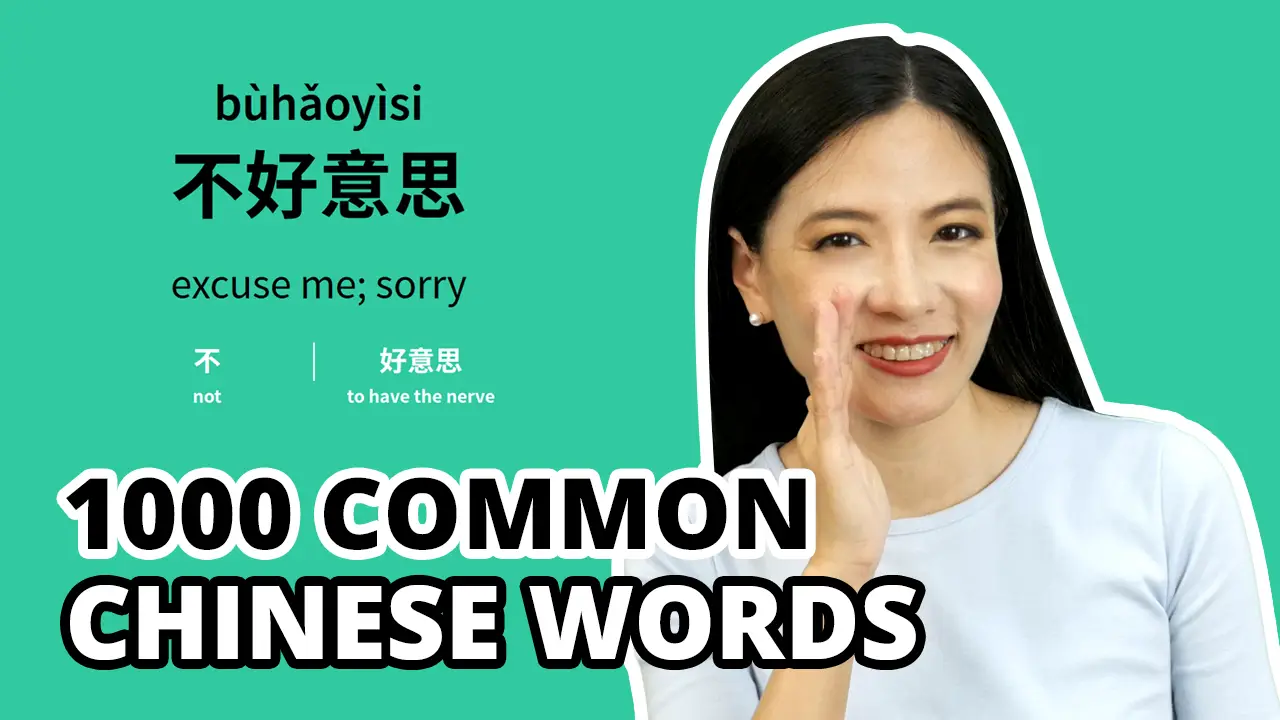
1000 Most Common Chinese Words For Beginners: Lesson 17
In this seventeenth lesson of our "1000 Most Common Chinese Words For Beginners" Course, we will learn another group of the 1000 Most Common Chinese Words, which contains the following 20 words and phrases that are very useful for daily Chinese conversations:
- 哪些 nǎxiē ▸ q.pron. which (ones)
- 上个星期 shàng ge xīngqī ▸ n. phr. last week
- 下个星期 xià ge xīngqī ▸ n. phr. next week
- 好吗 hǎo ma ▸ okay(?)
- 会 huì ▸ mv. will
- 洗 xǐ ▸ v. to wash
- 别的 biéde ▸ pron. other; others
- 让 ràng ▸ v. to make (sb. do sth.)
- 每天 měi tiān ▸ n. phr. every day
- 跳 tiào ▸ v. to jump
- 欢迎 huānyíng ▸ v. to welcome
- 鸟 niǎo ▸ n. bird
- 给 gěi ▸ prep. to; for
- 鼻子 bízi ▸ n. nose
- 邮局 yóujú ▸ n. post office
- 真的 zhēnde ▸ really; indeed
- 长 cháng ▸ adj. long
- 短 duǎn ▸ adj. short (in length)
- 打开 dǎkāi ▸ v. to open
- 关上 guānshàng ▸ v. to close
VOCABULARY USAGE
1.
哪些 nǎxiē
q.pron. ▸ which (ones)
EXAMPLE SENTENCES
- Nǐ huì shuō nǎxiē yǔyán?
你会说哪些语言?
You know-how-to speak which-ones language?
Which languages (do) you speak? - Nǐ yǒu nǎxiē xìngqù ’àihào?
你有哪些兴趣爱好?
You have which-ones interest hobby?
Which interest (and) hobbies (do) you have?
2.
上个星期 shàng ge xīngqī
n. phr. ▸ last week
EXAMPLE SENTENCES
- Wǒ shàng ge xīngqī qù le Shànghǎi.
我上个星期去了上海。
I last “ge” week go -le Shanghai.
I went to Shanghai last “ge” (of) week. - Shàng ge xīngqī wǒ zài jiā xiūxi le jǐ tiān.
上个星期我在家休息了几天。
Last “ge” week I “zai” home rest -le several day.
Last “ge” (of) week I rested at home (for) several days.
3.
下个星期 xià ge xīngqī
n. phr. ▸ next week
EXAMPLE SENTENCES
- Xià ge xīngqī wǒ yào qù lǚxíng.
下个星期我要去旅行。
Next “ge” week I intend to go travel.
Next “ge” (of) week I intend to go travel. - Xià ge xīngqī wǒ yǒu yí ge miànshì.
下个星期我有一个面试。
Next “ge” week I have one “ge” interview.
Next “ge” (of) week I have one “ge” (of) interview.
4.
好吗 hǎo ma
okay(?)
EXAMPLE SENTENCES
- Zhè ge zhōumò wǒmen yìqǐ qù kàn diànyǐng, hǎo ma?
这个周末我们一起去看电影,好吗?
This “ge” weekend we together go see movie, okay -ma?
This “ge” (of) weekend we go see (a) movie together, okay? - Nǐ bāng wǒ yí ge máng, hǎo ma?
你帮我一个忙,好吗?
You help me one “ge” favor, okay -ma?
You help me one “ge” (of) favor, okay?
5.
会 huì
mv. ▸ will
EXAMPLE SENTENCES
- Nǐ huì xiǎng wǒ ma?
A 你会想我吗?
Will you miss me -ma?
Will you miss me?
Wǒ huì xiǎng nǐ de.
B 我会想你的。
I will miss you -de.
I will miss you certainly. - Fàngxīn, wǒ bú huì wàngjì de.
放心,我不会忘记的。
Feel-relieved, I will not forget -de.
Feel-relieved, I will not forget (for-sure).
6.
洗 xǐ
v. ▸ to wash
EXAMPLE SENTENCES
- Wǒ yòng xǐyījī xǐ yīfu.
我用洗衣机洗衣服。
I use washing-machine wash clothes.
I use (the) washing-machine to wash clothes. - Wǒ wàngjì xǐ wǎn le.
我忘记洗碗了。
I forget to wash bowl -le.
I forgot to wash (the) dishes.
7.
别的 biéde
pron. ▸ other; others
EXAMPLE SENTENCES
- Nǐ hái yǒu biéde wèntí ma?
你还有别的问题吗?
You still have other question -ma?
(Do) you still have other questions? - Zhè ge wǒ bú tài xǐhuan, hái yǒu biéde ma?
这个我不太喜欢,还有别的吗?
This “ge” I not quite like, additionally “exist” other -ma?
This-one (-) I (do) not quite like, (does) there “exist” additionally others?
8.
让 ràng
v. ▸ to make (sb. do sth.)
EXAMPLE SENTENCES
- Tā ràng wǒ gěi tā dǎ ge diànhuà.
他让我给他打个电话。
He make me to he make “ge” phone-call.
He made me make (one) “ge” (of) phone-call to him. - Duìbuqǐ, wǒ ràng nǐ shāngxīn le.
对不起,我让你伤心了。
Sorry, I make you sad -le.
Sorry, I made you sad.
9.
每天 měi tiān
n. phr. ▸ every day
EXAMPLE SENTENCES
- Nǐ měi tiān jǐ diǎn qǐchuáng?
你每天几点起床?
You every day which-number o’clock get-up?
Which o’clock (do) you get-up every day? - Wǒ měi tiān kāi chē qù shàngbān.
我每天开车去上班。
I every day drive-vehicle go to attend-work.
Every day I drive to go to work.
10.
跳 tiào
v. ▸ to jump
EXAMPLE SENTENCES
- Tā tiào de hěn gāo.
他跳得很高。
He jump -de- very high.
He jumps very high. - Wǒ tiào de hěn yuǎn.
我跳得很远。
I jump -de- very far.
I jump very far.
11.
欢迎 huānyíng
v. ▸ to welcome
EXAMPLE SENTENCES
- Huānyíng nǐ dào wǒ jiā lái wánr.
欢迎你到我家来玩儿。
Welcome you arrive my home to “play”.
Welcome you to arrive my home to come to hang-out. - Xuéxiào jǔxíng le yí ge wǎnhuì huānyíng xīn tóngxué.
学校举行了一个晚会欢迎新同学。
School hold -le one “ge” evening-party welcome new classmate.
(The) school held one “ge” (of) evening-party to welcome (the) new classmates.
12.
鸟 niǎo
n. ▸ bird
EXAMPLE SENTENCES
- Shù shang yǒu yì zhī niǎo.
树上有一只鸟。
Tree-surface “exist” one “zhi” bird.
(On the) tree-surface (there) “exists” one “zhi” (of) bird. - Wǒ xǐhuan tīng niǎo jiào.
我喜欢听鸟叫。
I like listening to bird chirp.
I like listening to bird chirping.
13.
给 gěi
prep. ▸ to; for
EXAMPLE SENTENCES
- Zhè ge zhōumò wǒ yào gěi bàba guò shēngrì.
这个周末我要给爸爸过生日。
This “ge” weekend I need to for dad “go-pass” birthday.
This “ge” (of) weekend I need to celebrate birthday for (my) dad. - Tā gěi wǒ dǎ le yí ge diànhuà.
他给我打了一个电话。
He to me make -le one “ge” phone-call.
He made one “ge” (of) phone-call to me.
14.
鼻子 bízi
n. ▸ nose
EXAMPLE SENTENCES
- Wǒ gǎnmào le, bízi bù shūfu.
我感冒了,鼻子不舒服。
I catch-cold -le, nose not comfortable.
I caught(-a-)cold, (and my) nose (is) not comfortable. - Tā de bízi shang zhǎng le yí ge dòudòu.
他的鼻子上长了一个痘痘。
He -de- nose-surface grow -le one “ge” pimple.
His nose-surface (has) grown one “ge” (of) pimple.
15.
邮局 yóujú
n. ▸ post office
EXAMPLE SENTENCES
- Qǐngwèn zhèr fùjìn yǒu yóujú ma?
请问这儿附近有邮局吗?
Please-ask here nearby-places “exist” post-office -ma?
Please(-allow-me-to)ask (do) nearby-places here “exist” (a) post-office? - Yóujú lí xuéxiào yuǎn ma?
邮局离学校远吗?
Post-office “to be away from” school far -ma?
Is (the) post-office far away-from (the) school?
16.
真的 zhēnde
really; indeed
EXAMPLE SENTENCES
- Nǐ zhēnde hěn cōngmíng!
你真的很聪明!
You really very smart!
You really (are) very smart! - Wǒ zhēnde hěn xǐhuan tā.
我真的很喜欢他。
I really very like he.
I really like him a-lot.
17.
长 cháng
adj. ▸ long
EXAMPLE SENTENCES
- Tā de tóufa hěn cháng, hěn piàoliang.
她的头发很长,很漂亮。
She -de- hair very long, very pretty.
Her hair (is) very long, (and) very pretty. - Zhè ge shìpín zhēn cháng ’a! Yǒu yí ge xiǎoshí.
这个视频真长啊!有一个小时。
This “ge” video really long -a! “Reach” one “ge” hour.
This “ge” (of) video (is) really long! (It) reaches one “ge” (of) hour.
18.
短 duǎn
adj. ▸ short (in length)
EXAMPLE SENTENCES
- Zhè piān wénzhāng hěn duǎn, zhǐ yǒu jǐ bǎi ge zì.
这篇文章很短,只有几百个字。
This “pian” article very short, only have several hundred “ge” character.
This “pian” (of) article (is) very short, (it) only has several hundreds “ge” (of) characters. - Zhè ge guǎnggào hěn duǎn, zhǐ yǒu shí miǎozhōng.
这个广告很短,只有十秒钟。
This “ge” advertisement very short, only has 10 second time.
This “ge” (of) advertisement (is) very short, (and it) only has 10 seconds’ time.
19.
打开 dǎkāi
v. ▸ to open
EXAMPLE SENTENCES
- Kèrén lái le, bǎ mén dǎkāi ba!
客人来了,把门打开吧!
Guest come -le, “ba” door open -ba!
(The) guest (has) come, “ba”{indicating the handling of} (the) door open! - Wǒ kěyǐ xiànzài bǎ lǐwù dǎkāi ma?
我可以现在把礼物打开吗?
I can now “ba” gift open -ma?
Can I (-) “ba”{indicating the handling of} (-) (the) gift open?
20.
关上 guānshàng
v. ▸ to close
EXAMPLE SENTENCES
- Wǒ méi bǎ chōuti guānshàng.
我没把抽屉关上。
I not “ba” drawer close.
I (have) not (-) “ba”{indicating the handling of} (-) (the) drawer close. - Wàimiàn hěn chǎo, bǎ mén guānshàng ba!
外面很吵,把门关上吧!
Outside very noisy, “ba” door close -ba!
Outside (is) very noisy, (let us) “ba”{indicating the handling of} (the) door close!