
1000 Most Common Chinese Words For Beginners – Lesson 18
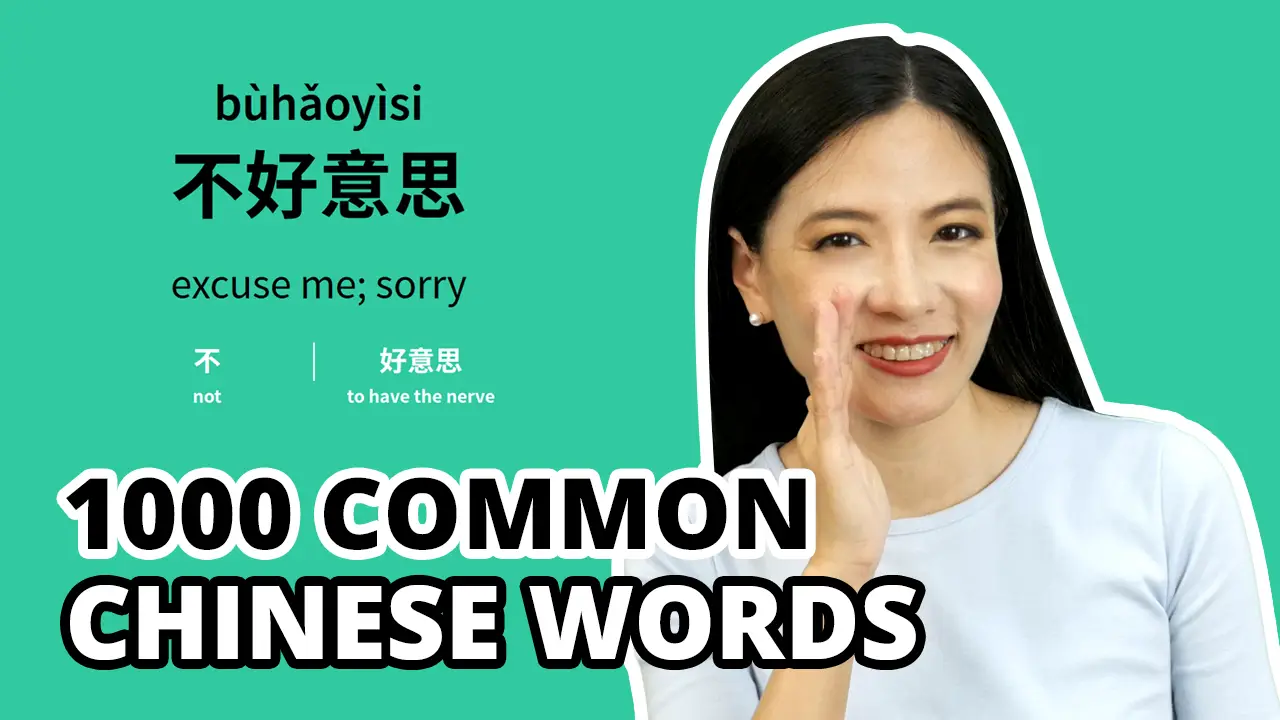
1000 Most Common Chinese Words For Beginners: Lesson 18
In this eighteenth lesson of our "1000 Most Common Chinese Words For Beginners" Course, we will learn another group of the 1000 Most Common Chinese Words, which contains the following 20 words and phrases that are very useful for daily Chinese conversations:
- 是吗 shì ma ▸ is (it?); yes(?)
- 可能 kěnéng ▸ m.v. perhaps; probably; possibly; might; maybe
- 回答 huídá ▸ v. to answer; to respond
- 嗯 èng ▸ interj. huh; uh-huh; hmm
- 欢迎光临 huānyíng guānglín ▸ welcome (to our shop, restaurant, etc.)
- 休息 xiūxi ▸ v. to rest; to take a break
- 卖 mài ▸ v. to sell
- 每个 měi ge ▸ pron.-m.w. phr. every “one” (of)
- 菜单 càidān ▸ n. menu
- 拿 ná ▸ v. to take; to get; to grab
- 准备 zhǔnbèi ▸ v. to prepare; to get ready
- 花 huā ▸ n. flower
- 轻 qīng ▸ adj. light; not heavy
- 重 zhòng ▸ adj. heavy; not light
- 读 dú ▸ v. to read
- 果汁 guǒzhī ▸n. fruit juice
- 常常 chángcháng ▸ adv. often; usually
- 这个月 zhè ge yuè ▸ n. phr. this month
- 上 shàng ▸ n. surface; top
- 上面 shàngmiàn ▸ n. surface; top
VOCABULARY USAGE
1.
是吗 shì ma
is (it?); yes(?)
EXAMPLE SENTENCES
- Nǐ huì shuō Hànyǔ, shì ma?
你会说汉语,是吗?
You know-how to speak Chinese, yes?
You know-how to speak Chinese, right? - Zhè bù diànyǐng hěn hǎokàn.
A 这部电影很好看。
This “bu” movie very good-to-watch.
This “bu” (of) movie (is) very entertaining-to-watch.
Shì ma? Wǒ yě xiǎng kàn.
B 是吗?我也想看。
Yes? I too want to watch.
Is (it)? I also want to watch (it).
2.
可能 kěnéng
m.v. ▸ perhaps; probably; possibly; might; maybe
EXAMPLE SENTENCES
- Tā jīntiān kěnéng bù lái le.
他今天可能不来了。
He today perhaps not come -le.
He might not come (here) today. - Wǒmen jīntiān wǎnshang kěnéng yào jiābān.
我们今天晚上可能要加班。
We today evening might need to work-overtime.
We might need to work-overtime today evening.
3.
回答 huídá
v. ▸ to answer; to respond
EXAMPLE SENTENCES
- Nǐ néng huídá zhè ge wèntí ma?
你能回答这个问题吗?
You can answer this “ge” question -ma?
Can you answer this “ge” (of) question? - Wǒ bù zhīdào zěnme huídá zhè ge wèntí.
我不知道怎么回答这个问题。
I not know how to answer this “ge” question.
I (do) not know how to answer this “ge” (of) question.
4.
嗯 èn
interj. ▸ huh; uh-huh; hmm
EXAMPLE SENTENCES
- Èn, wǒ zhīdào le.
嗯,我知道了。
Hmm, I know -le.
Hmm, I know (now). - Èn, wǒ zài kǎolǜ yí xià.
嗯,我再考虑一下。
Hmm, I moreover consider one “xia”.
Hmm, I (will) think-about (it) “really quick”.
5.
欢迎光临 huānyíng guānglín
welcome (to our shop, restaurant, etc.)
EXAMPLE SENTENCES
- Huānyíng guānglín, qǐng zhèbiān zǒu.
欢迎光临,请这边走。
Welcome, please this-side walk.
Welcome, please walk this-way. - Huānyíng guānglín zhè cì zhǎnlǎn.
欢迎光临这次展览。
Welcome to this “ci” exhibition.
Welcome to this “time” (of) exhibition.
6.
休息 xiūxi
v. ▸ to rest; to take a break
EXAMPLE SENTENCES
- Wǒ jīntiān hěn lèi, xiǎng xiūxi.
我今天很累,想休息。
I today very tired, want to rest.
I today (am) very tired, (and I) want to rest. - Wǒmen xiān xiūxi wǔ fēnzhōng, děng yí xià zài jìxù.
我们先休息五分钟,等一下再继续。
We first rest five minute, wait one “xia” again continue.
We (will) rest (for) five minutes first, (and) wait “(for) a little bit” (and) then continue.
7.
卖 mài
v. ▸ to sell
EXAMPLE SENTENCES
- Wǒ xiǎng bǎ jiù jiājù mài le.
我想把旧家具卖了。
I want to “ba” old furniture sell -le.
I want to (-) “ba”{indicating the handling of} (my) old furniture (-) sell. - Wǒmen de gōngsī mài diànnǎo hé shǒujī.
我们的公司卖电脑和手机。
We -de- company sell computer and cellphone.
Our company sells computers and cellphones.
8.
每个 měi ge
pron.-m.w. phr. ▸ every “one” (of)
EXAMPLE SENTENCES
- Wǒ měi ge yuè dōu huì qù diànyǐngyuàn kàn yí cì diànyǐng.
我每个月都会去电影院看一次电影。
I every “ge” month all will go to movie-theater to watch one “ci” movie.
I (in) every “ge” (of) month all will go to (the) movie-theater to watch movie (for) one “time”. - Měi ge rén dōu yǒu zìjǐ de xiǎngfǎ.
每个人都有自己的想法。
Every “ge” person all has self -de- opinion.
Every “ge” (of) person all has (them)selves’ opinion.
9.
菜单 càidān
n. ▸ menu
EXAMPLE SENTENCES
- Néng gěi wǒ kàn yí xià càidān ma?
能给我看一下菜单吗?
Can permit me view one “xia” dish-menu -ma?
Can (you) permit me to look-at (the) dish-menu “really quick”? - Qǐngwèn yǒu Yīngwén càidān ma?
请问有英文菜单吗?
Please-ask have English dish-menu -ma?
Please(-allow-me-to-)ask(, do you) have (an) English dish-menu?
10.
拿 ná
v. ▸ to take; to get; to grab
EXAMPLE SENTENCES
- Wàimài dào le, wǒ qù ná ba!
外卖到了,我去拿吧!
Delivery-food arrive -le, I go get -ba!
(The) delivery-food (has) arrived, (let) me go get (it)! - Wǒ bāng nǐ ná xíngli ba!
我帮你拿行李吧!
I help you carry luggage -ba!
(Let) me help you carry (the) luggage!
11.
准备 zhǔnbèi
v. ▸ to prepare; to get ready
EXAMPLE SENTENCES
- Wǒ huā le hěn duō shíjiān zhǔnbèi zhè cì kǎoshì.
我花了很多时间准备这次考试。
I spend -le very much time to prepare-for this “ci” exam.
I spent very much time to prepare-for this “time” (of) exam. - Nǐmen zhǔnbèi hǎo le ma? Nà wǒmen kāishǐ ba!
你们准备好了吗?那我们开始吧!
You-guys prepare-good -le -ma? Then we start -ba!
(Have) you-guys prepared-good(-and-ready)? Then (let) us start!
12.
花 huā
n. ▸ flower
EXAMPLE SENTENCES
- Jīntiān shì Mǔqīn Jié, wǒ gěi māma mǎi le yì shù huā.
今天是母亲节,我给妈妈买了一束花。
Today is Mother's Day, I for mom buy -le one “shu” flower.
Today is Mother’s Day, I bought one “bouquet” (of) flowers for (my) mom. - Tā zài zhǐ shang huà le yì duǒ huā.
她在纸上画了一朵花。
She “zai” paper-surface draw -le one “duo” flower.
She drew one “duo” (of) flower on (the) paper-surface.
13.
轻 qīng
adj. ▸ light; not heavy
EXAMPLE SENTENCES
- Wǒ de xínglixiāng hěn qīng.
我的行李箱很轻。
I -de- luggage-case very light.
My luggage-case (is) very light. - Háizi de tǐzhòng hěn qīng.
孩子的体重很轻。
Child -de- body-weight very light.
(The) child’s body-weight (is) very light.
14.
重 zhòng
adj. ▸ heavy; not light
EXAMPLE SENTENCES
- Wǒ de bāo tài zhòng le! Nǐ néng bāng wǒ ná yí xià ma?
我的包太重了!你能帮我拿一下吗?
I -de- bag too heavy -le! You can help me take one “xia” -ma?
My bag (is) too heavy! Can you help me carry (it) “really quick”? - Zhè duì yǎlíng hěn zhòng, yǒu méi yǒu qīng yì diǎn de?
这对哑铃很重,有没有轻一点的?
This “dui” dumbbell very heavy, have-not-have light one “dian” -de?
This “pair” (of) dumbbells (are) very heavy, (do you) have (or) not have (ones that are) “a little bit” lighter?
15.
读 dú
v. ▸ to read
EXAMPLE SENTENCES
- Zhè ge Hànzì wǒ bú huì dú.
这个汉字我不会读。
This “ge” Chinese-character (-) I not know-how to read.
This “ge” (of) Chinese-character (-) I (do) not know-how to read. - Zhè běn xiǎoshuō wǒ dú guo, hěn yǒu yìsi.
这本小说我读过,很有意思。
This “ben” novel (-) I read -guo, very interesting.
This “ben” (of) novel (-) I (have) read, (it is) very interesting.
16.
果汁 guǒzhī
n. ▸ fruit juice
EXAMPLE SENTENCES
- Zǎocān wǒ hē guǒzhī.
早餐我喝果汁。
Breakfast (-) I drink fruit-juice.
Breakfast (-) I drink fruit-juice. - Nǐ xǐhuan shénme guǒzhī?
你喜欢什么果汁?
You like what fruit-juice?
What fruit-juice (do) you like?
17.
常常 chángcháng
adv. ▸ often; usually
EXAMPLE SENTENCES
- Wǒ chángcháng hé tóngshì men yìqǐ chī wǔfàn.
我常常和同事们一起吃午饭。
I often with coworker -men together eat lunch.
I often eat lunch together with (my) coworkers. - Yéye chángcháng gēn wǒ jiǎng tā niánqīng shíhou de shì.
爷爷常常跟我讲他年轻时候的事。
Grandpa often with me tell he young time -de- thing.
Grandpa often tells to me things (of) his young time.
18.
这个月 zhè ge yuè
n. phr. ▸ this month
EXAMPLE SENTENCES
- Zhè ge yuè shì shí yuè.
这个月是十月。
This “ge” month is October.
This “ge” (of) month is October. - Zhè ge yuè de xīn diànyǐng hěn hǎokàn, nǐ kàn le ma?
这个月的新电影很好看,你看了吗?
This “ge” month -de- new movie very good-to-watch, you watch -le -ma?
This “ge” (of) month’s new movie (is) very entertaining-to-watch, (have) you seen (it)?
19.
上 shàng
n. ▸ surface; top
EXAMPLE SENTENCES
- Zhuōzi shang yǒu yì bēi shuǐ.
桌子上有一杯水。
Table-surface “exist” one “cup” water.
(The) table-surface “exists” one “cup” (of) water. - Mèimei zài lóu shang shuìjiào.
妹妹在楼上睡觉。
Little-sister “zai” upstairs sleep.
(The) little-sister is sleeping “on” upstairs.
20.
上面 shàngmiàn
n. ▸ surface; top
EXAMPLE SENTENCES
- Hétóng shàngmiàn xiě zhe wǒ de míngzi.
合同上面写着我的名字。
Contract-surface write -zhe I -de- name.
(The) contract-surface (has) my name writing (on it). - Zhuōzi shàngmiàn de bǐjìběn shì tā de.
桌子上面的笔记本是他的。
Table-surface -de- notebook is he -de.
(The) notebook (on the) table-surface is his.