
1000 Most Common Chinese Words For Beginners – Lesson 19
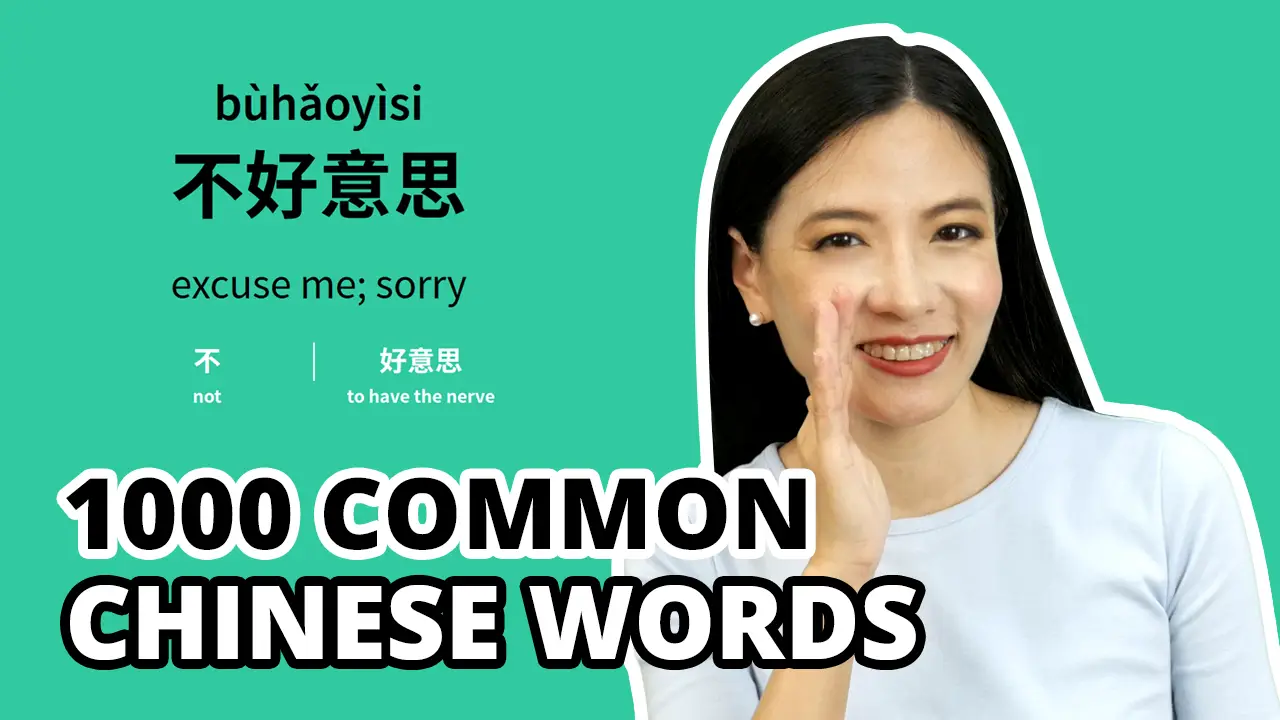
1000 Most Common Chinese Words For Beginners: Lesson 19
In this nineteenth lesson of our "1000 Most Common Chinese Words For Beginners" Course, we will learn another group of the 1000 Most Common Chinese Words, which contains the following 20 words and phrases that are very useful for daily Chinese conversations:
- 怎么样 zěnmeyàng ▸ q.pron. how about; how is
- 以前 yǐqián ▸ n. time before now; time before another previously mentioned time
- 以后 yǐhòu ▸ n. time after now; time after another previously mentioned time
- 抱歉 bàoqiàn ▸ adj. feeling sorry
- 对吗 duì ma ▸ right(?); yes(?); correct(?)
- 哼 hèng ▸ interj. humph (expressing dissatisfaction, contempt, or indignation)
- 岁 suì ▸ n. year (of age)
- 票 piào ▸ n. ticket
- 不要 búyào ▸ adv. (do) not
- 放 fàng ▸ v. to place (sth.)
- 价格 jiàgé ▸ n.price
- 黑色 hēisè ▸ n. (the) color (of) black
- 穿 chuān ▸ v. to wear (clothing)
- 唱歌 chànggē ▸ v. / v. phr. to sing (song)
- 饮料 yǐnliào ▸ n. drink; beverage
- 开会 kāihuì ▸ v. to have (a) meeting
- 好吃 hǎochī ▸ adj. (of food) tasty
- 好看 hǎokàn ▸ adj. good-looking; pretty; entertaining-to-watch
- 下 xià ▸ n. underneath; bottom
- 下面 xiàmiàn ▸ n. underneath; bottom
VOCABULARY USAGE
1.
怎么样 zěnmeyàng
q.pron. ▸ how about; how is
EXAMPLE SENTENCES
- Zhè jiā cāntīng de cài zěnmeyàng?
这家餐厅的菜怎么样?
How-is this “jia” restaurant -de- dish?
How are this “jia” (of) restaurant’s dishes? - Nǐ jīntiān guò de zěnmeyàng?
你今天过得怎么样?
You today go-pass -de- how?
How was your day today?
2.
以前 yǐqián
n. ▸ time before now; time before another previously mentioned time
EXAMPLE SENTENCES
- Wǒ yǐqián méi tīngshuō guo zhè ge dìfang.
我以前没听说过这个地方。
I time-before not hear-of -guo this “ge” place.
Before, I had not heard of this “ge” (of) place. - Shuìjiào yǐqián wǒ xǐhuan kàn yí huìr shū.
睡觉以前我喜欢看一会儿书。
Sleep time-before I like read “a short while” book.
Before going to sleep, I like reading (for) a short while.
3.
以后 yǐhòu
n. ▸ time after now; time after another previously mentioned time
EXAMPLE SENTENCES
- Xiàbān yǐhòu nǐ yǒu ’ānpái ma?
下班以后你有安排吗?
Get-off-work time-after you have plan -ma?
Do you have plans after work? - Nǐ xǐhuan Bālí ma? Yǐhòu wǒmen kěyǐ yìqǐ qù.
你喜欢巴黎吗?以后我们可以一起去。
You like Paris -ma? Time-after we can together go.
Do you like Paris? In the future, we can go together.
4.
抱歉 bàoqiàn
adj. ▸ feeling sorry
EXAMPLE SENTENCES
- Bàoqiàn, wǒ méi tīng qīngchu.
抱歉,我没听清楚。
Sorry, I not hear-clear.
Sorry, I didn’t hear clearly. - Bàoqiàn, wǒ méi dài qiánbāo.
抱歉,我没带钱包。
Sorry, I not bring wallet.
Sorry, I didn’t bring my wallet.
5.
对吗 duì ma
right(?); yes(?); correct(?)
EXAMPLE SENTENCES
- Jīntiān xīngqī yī, duì ma?
今天星期一,对吗?
Today Monday, correct -ma?
Today is Monday, right? - Tā shì nǐ péngyou, duì ma?
他是你朋友,对吗?
He is you friend, correct -ma?
He is your friend, right?
6.
哼 hēng
interj. ▸ humph (expressing dissatisfaction, contempt, or indignation)
EXAMPLE SENTENCES
- Hēng, wǒ bù xiāngxìn nǐ.
哼,我不相信你。
Humph, I not trust you.
Humph, I don’t trust you. - Hēng, wǒ bù xiǎng gēn nǐ shuōhuà.
哼,我不想跟你说话。
Humph, I not want to with you talk.
Humph, I don’t want to talk to you.
7.
岁 suì
n. ▸ year (of age)
EXAMPLE SENTENCES
- Tā nǚ’ér jīntiān mǎn yí suì.
她女儿今天满一岁。
She daughter today reach one year-old.
Her daughter turns one today. - Wǒ bàba jīnnián sì shí suì le.
我爸爸今年四十岁了。
I dad this-year 40 years-old -le.
My dad is 40 this year.
8.
票 piào
n. ▸ ticket
EXAMPLE SENTENCES
- Wǒ mǎi le míngtiān wǎnshang qī diǎn de diànyǐngpiào.
我买了明天晚上七点的电影票。
I buy -le tomorrow evening 7 o’clock -de- movie ticket.
I bought the movie ticket for tomorrow at 7 p.m. - Wǒ yǒu liǎng zhāng yīnyuèhuì de ménpiào, nǐ qù bu qù?
我有两张音乐会的门票,你去不去?
I have two “zhang” concert -de- gate-ticket, you go-not-go?
I have two tickets to the concert. Are you going or not?
9.
不要 búyào
adv. ▸ (do) not
EXAMPLE SENTENCES
- Bú yào shuì de tài wǎn, zǎo diǎn xiūxi ba!
不要睡得太晚,早点休息吧!
(Do-)not sleep -de- too late, early “dian” rest -ba!
Don’t stay up too late. Get some rest a bit earlier. - Bú yào dānxīn, wǒ huì bāng nǐ de.
不要担心,我会帮你的。
(Do-)not worry, I will help you -de.
Don’t worry, I’ll help you.
10.
放 fàng
v. ▸ to place (sth.)
EXAMPLE SENTENCES
- Niúnǎi wǒ fàng zài bīngxiāng li le.
牛奶我放在冰箱里了。
Milk (-) I put in refrigerator-inside -le.
I put the milk in the fridge already. - Wǒ de xíngli fàng zài nà ge fángjiān li.
我的行李放在那个房间里。
I -de- luggage put “zai” that “ge” room-inside.
My luggage is in that room.
11.
价格 jiàgé
n. ▸ price
EXAMPLE SENTENCES
- Nǐ juéde zhè ge jiàgé héshì ma?
你觉得这个价格合适吗?
You think this “ge” price appropriate -ma?
Do you think this price is reasonable? - Wǒ juéde jiàgé yǒu diǎn gāo.
我觉得价格有点高。
I think price “kind of” high.
I think the price is a bit high.
12.
黑色 hēisè
n. ▸ (the) color (of) black
EXAMPLE SENTENCES
- Tā chuān le yí jiàn hēisè de yīfu.
他穿了一件黑色的衣服。
He wear -le one “jian” black-color -de- clothes.
He put on a black piece of clothing. - Tā de tóufa shì hēisè de.
她的头发是黑色的。
She -de- hair is black-color -de.
Her hair is black.
13.
穿 chuān
v. ▸ to wear (clothing)
EXAMPLE SENTENCES
- Tā chuān zhe yí jiàn bái sè de chènshān.
她穿着一件白色的衬衫。
She wear -zhe one “jian” white-color -de- shirt.
She is wearing a white shirt. - Tā chuān de hěn shíshàng.
他穿得很时尚。
He wear -de- very fashionable.
He dresses very fashionably.
14.
唱歌 chànggē
v. / v. phr. ▸ to sing (song)
EXAMPLE SENTENCES
- Wǒ mèimei chànggē fēicháng hǎotīng.
我妹妹唱歌非常好听。
I little-sister sing-song “unusually” good-to-listen.
My little sister sings really well. - Tā xǐzǎo de shíhou xǐhuan chànggē.
他洗澡的时候喜欢唱歌。
He take-shower -de- time like sing-song.
He likes singing when he takes a shower.
15.
饮料 yǐnliào
n. ▸ drink; beverage
EXAMPLE SENTENCES
- Wǒ yào mǎi yì píng yǐnliào.
我要买一瓶饮料。
I intend to buy one “bottle” drink.
I want to buy a bottle of drink. - Duìbuqǐ, wǒmen hái méi diǎn yǐnliào.
对不起,我们还没点饮料。
Sorry, we still not order drink.
Sorry, we still haven’t ordered any drinks.
16.
开会 kāihuì
v. ▸ to have (a) meeting
EXAMPLE SENTENCES
- Wǒmen míngtiān xiàwǔ sān diǎn kāihuì.
我们明天下午三点开会。
We tomorrow afternoon 3 o’clock have-meeting.
We have a meeting tomorrow at 3 p.m. - Bàoqiàn, wǒ zài kāihuì, bù fāngbiàn jiē diànhuà.
抱歉,我在开会,不方便接电话。
Sorry, I “zai” have-meeting, not convenient to receive phone-call.
Sorry, I’m in a meeting and can’t take the call.
17.
好吃 hǎochī
adj. ▸ (of food) tasty
EXAMPLE SENTENCES
- Wǒ māma zuò de cài hěn hǎochī.
我妈妈做的菜很好吃。
I mom make -de- dish very good-to-eat.
The food my mom makes is really tasty. - Tāmen dōu shuō zhè ge dàngāo hǎochī.
他们都说这个蛋糕好吃。
They all say this “ge” cake good-to-eat.
They all say this cake is delicious.
18.
好看 hǎokàn
adj. ▸ good-looking; pretty; entertaining-to-watch
EXAMPLE SENTENCES
- Nǐ de qúnzi zhēn hǎokàn.
你的裙子真好看。
You -de- dress really good-looking.
Your dress looks really nice. - Zhè bù diànshìjù zhēn hǎokàn, wǒ kàn le liǎng biàn.
这部电视剧真好看,我看了两遍。
This “bu” TV-drama really good-to-watch, I watch -le two “bian”.
This TV drama is so good. I watched it twice.
19.
下 xià
n. ▸ underneath; bottom
EXAMPLE SENTENCES
- Wǒ jiā lóu xià yǒu jǐ jiā hěn hǎochī de cāntīng.
我家楼下有几家很好吃的餐厅。
I home building-underneath “exist” several “jia” very tasty -de- restaurant.
Downstairs from my place there are a few really good restaurants. - Tā zuò zài shù xià kàn shū.
他坐在树下看书。
He sit “zai” tree-underneath read book.
He sits under the tree and reads.
20.
下面 xiàmiàn
n. ▸ underneath; bottom
EXAMPLE SENTENCES
- Wǒ de shūbāo zài zhuōzi xiàmiàn.
我的书包在桌子下面。
I -de- book-bag “zai” table-underneath.
My schoolbag is under the table. - Shūjià xiàmiàn yǒu hěn duō huīchén.
书架下面有很多灰尘。
Bookshelf-underneath “exist” very much dust.
There’s a lot of dust under the bookshelf.