
1000 Most Common Chinese Words For Beginners – Lesson 20
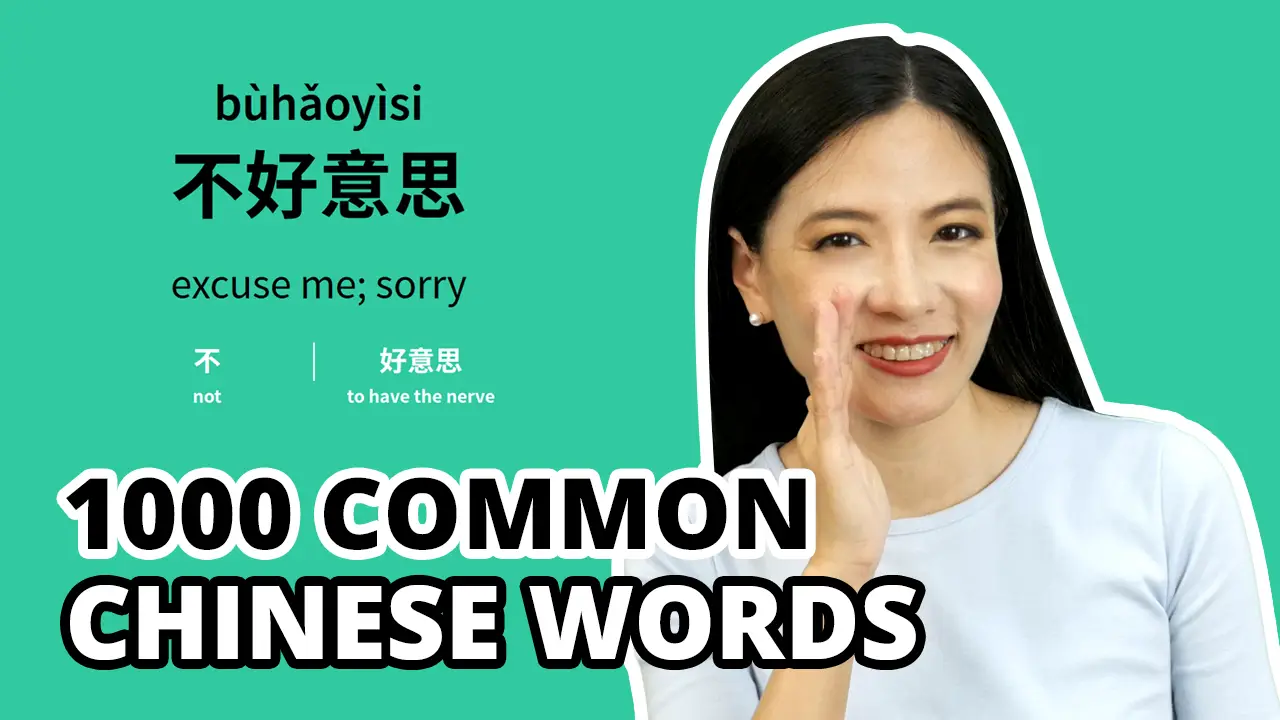
1000 Most Common Chinese Words For Beginners: Lesson 20
In this 20th lesson of our "1000 Most Common Chinese Words For Beginners" Course, we will learn another group of the 1000 Most Common Chinese Words, which contains the following 20 words and phrases that are very useful for daily Chinese conversations:
- 多大 duō dà ▸ how old
- 几岁 jǐ suì ▸ how old (typically asking sb. younger than 10)
- 别人 biérén ▸ pron. other people
- 对了 duì le ▸ by the way
- 帽子 màozi ▸ n. hat
- 了 le ▸ p. aspect particle used after an action verb and before the object to mark the completion of an action
- 白色 báisè ▸ n. (the) color (of) white
- 已经 yǐjīng ▸ adv. already
- 放 fàng ▸ v. to add (sth.) into (sth.)
- 都 dōu ▸ adv. both; all
- 洗澡 xǐzǎo ▸ v. / v. phr. to take a shower; to take a bath
- 戴 dài ▸ v. to wear (accessories)
- 或者 huòzhě ▸ conj. or (used in declarative sentences)
- 难吃 nánchī ▸ adj. (of food) bad tasting
- 难看 nánkàn ▸ adj. bad-looking; not entertaining-to-watch
- 跳舞 tiàowǔ ▸ v. / v. phr. to dance (dance)
- 懂 dǒng ▸ v. to understand
- 刷牙 shuā yá ▸ v. phr. to brush teeth
- 上个月 shàng ge yuè ▸ n. phr. last month
- 下个月 xià ge yuè ▸ n. phr. next month
VOCABULARY USAGE
1.
多大 duō dà
how old
EXAMPLE SENTENCES
- Nǐ jīnnián duō dà?
你今年多大?
You this-year how-much big?
How old are you this year? - Nǐmen de háizi duō dà le?
你们的孩子多大了?
You-guys -de- child how-much big -le?
How old is your child now?
2.
几岁 jǐ suì
how old (typically asking sb. younger than 10)
EXAMPLE SENTENCES
- Xiǎopéngyou, nǐ jīnnián jǐ suì?
小朋友,你今年几岁?
“Little-friend”, you this-year which-number year?
Kid, how old are you this year? - Tā nǚ’ér jǐ suì le?
他女儿几岁了?
He daughter which-number year -le?
How old is his daughter now?
3.
别人 biérén
pron. ▸ other people
EXAMPLE SENTENCES
- Wǒ bú tài qīngchu, nǐ kěyǐ wènwen biérén.
我不太清楚,你可以问问别人。
I not too know-clearly, you can ask-ask other-people.
I’m not sure. You can ask someone else. - Chúle wǒmen liǎ, biérén dōu bù zhīdào zhè jiàn shìqing.
除了我们俩,别人都不知道这件事情。
Apart-from we two, other-people all not know this “jian” thing.
Besides the two of us, nobody else knows about this.
4.
对了 duì le
by the way
EXAMPLE SENTENCES
- Duì le, wàimiàn zài xià yǔ, bié wàng le dài sǎn.
对了,外面在下雨,别忘了带伞。
By-the-way, outside “zai” go-down-rain, not forget -le bring umbrella.
By the way, it’s raining outside. Don’t forget to bring an umbrella. - Duì le, zhōumò yǒu yǎnchànghuì, nǐ xiǎng qù ma?
对了,周末有演唱会,你想去吗?
By-the-way, weekend “exist” concert, you want to go -ma?
By the way, there’s a concert this weekend. Do you want to go?
5.
帽子 màozi
n. ▸ hat
EXAMPLE SENTENCES
- Zhè dǐng màozi hěn hǎokàn.
这顶帽子很好看。
This “ding” hat very good-looking.
This hat looks really nice. - Tā dài zhe yì dǐng màozi.
他戴着一顶帽子。
He wear -zhe one “ding” hat.
He is wearing a hat.
6.
了 le
p. ▸ aspect particle used after an action verb and before the object to mark the completion of an action
EXAMPLE SENTENCES
- Wǒ chī le yí kuài qiǎokèlì.
我吃了一块巧克力。
I eat -le one “kuai” chocolate.
I ate a piece of chocolate. - Tā mǎi le yí liàng xīn chē.
他买了一辆新车。
He buy -le one “liang” new vehicle.
He bought a new car.
7.
白色 báisè
n. ▸ (the) color (of) white
EXAMPLE SENTENCES
- Nà tiáo qúnzi shì báisè de.
那条裙子是白色的。
That “tiao” dress is white-color -de.
That dress is white. - Wǒ xǐhuan báisè de huā, hěn piàoliang.
我喜欢白色的花,很漂亮。
I like white-color -de- flower, very pretty.
I like white flowers. They’re very pretty.
8.
已经 yǐjīng
adv. ▸ already
EXAMPLE SENTENCES
- Wǒ yǐjīng dào jīchǎng le, nǐmen ne?
我已经到机场了,你们呢?
I already arrive airport -le, you-guys -ne?
I’m already at the airport. What about you? - Zhè ge Hànzì wǒ yǐjīng xué guo le.
这个汉字我已经学过了。
This “ge” Chinese-character I already learn -guo -le.
I’ve already learned this character.
9.
放 fàng
v. ▸ to add sth. into sth.
EXAMPLE SENTENCES
- Tāng li fàng yán le ma?
汤里放盐了吗?
Soup-inside put-in salt -le -ma?
Did you add salt to the soup? - Nín de kāfēi yào fàng táng ma?
您的咖啡要放糖吗?
You -de- coffee need to put-in sugar -ma?
Would you like sugar in your coffee?
10.
都 dōu
adv. ▸ both; all
EXAMPLE SENTENCES
- Wǒ hé gēge dōu xǐhuan tīng yīnyuè.
我和哥哥都喜欢听音乐。
I and big-brother both like listening to music.
My older brother and I both like listening to music. - Tāmen dōu shì xuéshēng.
他们都是学生。
They all are student.
They are all students.
11.
洗澡 xǐzǎo
v. / v. phr. ▸ to take a shower; to take a bath
EXAMPLE SENTENCES
- Tā zhèngzài xǐzǎo.
他正在洗澡。
He “in process of” take-shower.
He is taking a shower right now. - Nǐ zǎoshang xǐzǎo háishì wǎnshang xǐzǎo?
你早上洗澡还是晚上洗澡?
You morning take-shower or evening take-shower.
Do you shower in the morning or at night?
12.
戴 dài
v. ▸ to wear (accessories)
EXAMPLE SENTENCES
- Tā dài zhe yǎnjìng.
他戴着眼镜。
He wear -zhe eye-glasses.
He is wearing glasses. - Tā dài de xiàngliàn zhēn piàoliang!
她戴的项链真漂亮!
She wear -de- necklace really pretty!
The necklace she’s wearing is really pretty!
13.
或者 huòzhě
conj. ▸ or (used in declarative sentences)
EXAMPLE SENTENCES
- Wǒmen jīntiān huòzhě míngtiān qù dōu kěyǐ.
我们今天或者明天去都可以。
We today or tomorrow go both okay.
Going today or tomorrow is fine. - Wǒ xiǎng mǎi zhè ge, huòzhě nà ge.
我想买这个,或者那个。
I want to buy this-“ge”, or that-“ge”.
I want to buy this one, or that one.
14.
难吃 nánchī
adj. ▸ (of food) bad tasting
EXAMPLE SENTENCES
- Zhè dào cài zhēnde hěn nánchī.
这道菜真的很难吃。
This “dao” dish really very difficult-to-eat.
This dish tastes really bad. - Zhè jiā diàn de pīsà wǒ juéde hěn nánchī.
这家店的披萨我觉得很难吃。
This “jia” shop -de- pizza (-) I feel very difficult-to-eat.
I think this shop’s pizza tastes pretty bad.
15.
难看 nánkàn
adj. ▸ bad-looking; not entertaining-to-watch
EXAMPLE SENTENCES
- Zhè ge diànyǐng hěn nánkàn.
这个电影很难看。
This “ge” movie very difficult-to-watch.
This movie is really boring. - Zhè ge shèjì zhēn nánkàn.
这个设计真难看。
This “ge” design really difficult-to-look-at.
This design is really ugly.
16.
跳舞 tiàowǔ
v. / v. phr. ▸ to dance
EXAMPLE SENTENCES
- Nǐ huì tiàowǔ ma?
你会跳舞吗?
You know-how to dance -ma?
Can you dance? - Wǒ xǐhuan kàn biérén tiàowǔ.
我喜欢看别人跳舞。
I like watch other-people dance.
I like watching other people dance.
17.
懂 dǒng
v. ▸ to understand
EXAMPLE SENTENCES
- Wǒ dǒng yì diǎnr Zhōngwén.
我懂一点儿中文。
I know one “dian” Chinese.
I understand a little Chinese. - Zhè ge zì de yìsi wǒ bú tài dǒng.
这个字的意思我不太懂。
This “ge” Chinese-character -de- meaning I not too understand.
I don’t really understand the meaning of this character.
18.
刷牙 shuā yá
v. phr. ▸ to brush teeth
EXAMPLE SENTENCES
- Nǐ shuā yá le ma?
你刷牙了吗?
You brush-teeth -le -ma?
Have you brushed your teeth? - Wǒ yòng diàndòng yáshuā shuā yá.
我用电动牙刷刷牙。
I use electric toothbrush to brush teeth.
I use an electric toothbrush to brush my teeth.
19.
上个月 shàng ge yuè
n. phr. ▸ last month
EXAMPLE SENTENCES
- Shàng ge yuè wǒ qù lǚyóu le.
上个月我去旅游了。
Last “ge” month I go travel -le.
I went traveling last month. - Tā shàng ge yuè zhǎodào gōngzuò le.
他上个月找到工作了。
He last “ge” month find job -le.
He found a job last month.
20.
下个月 xià ge yuè
n. phr. ▸ next month
EXAMPLE SENTENCES
- Wǒmen xià ge yuè jiéhūn.
我们下个月结婚。
We next “ge” month get-married.
We’re getting married next month. - Xià ge yuè wǔ hào shì wǒ de shēngrì.
下个月五号是我的生日。
Next “ge” month 5th is I -de- birthday.
The 5th of next month is my birthday.