
1000 Most Common Chinese Words For Beginners – Lesson 31
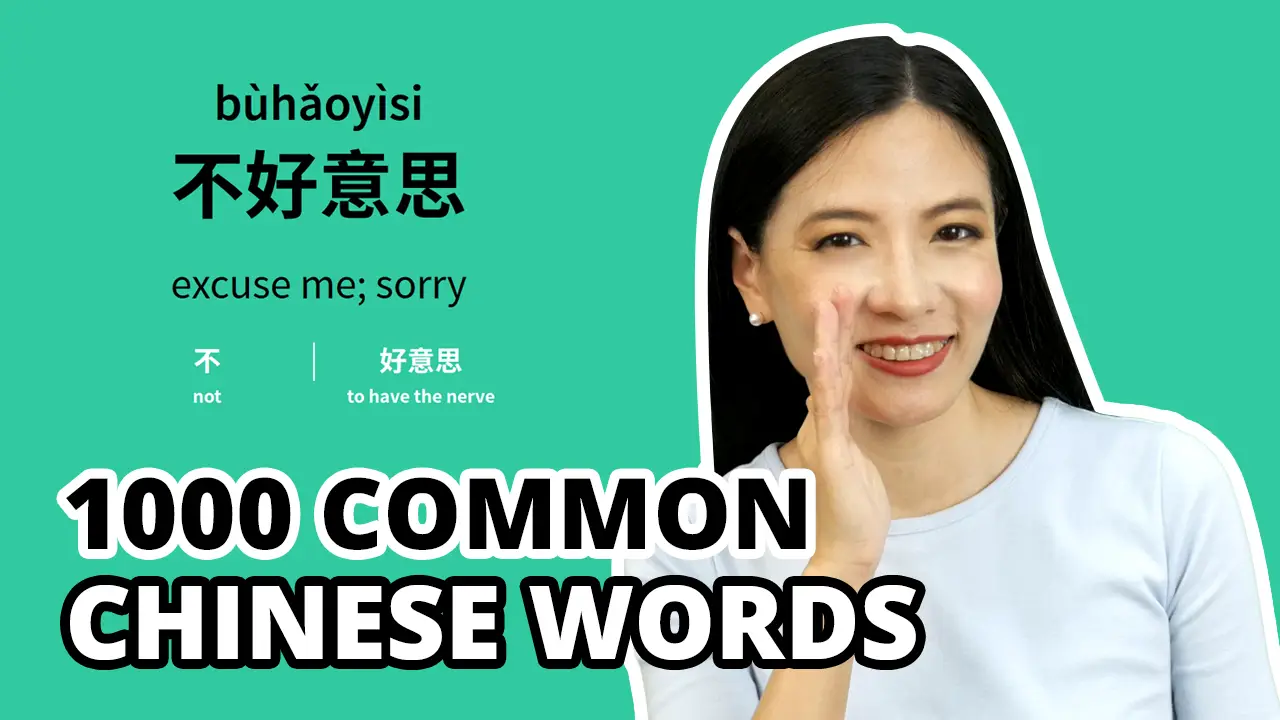
1000 Most Common Chinese Words For Beginners: Lesson 31
In this 31st lesson of our "1000 Most Common Chinese Words For Beginners" Course, we will learn another group of the 1000 Most Common Chinese Words, which contains the following 20 words and phrases that are very useful for daily Chinese conversations:
- 被 bèi ▸ prep. used before the Object that performs an action in "被 Sentences”
- 多么 duōme ▸ adv. used in exclamatory sentences to indicate high degree
- 为 wèi ▸ prep. for (the purpose, or reason of)
- 决定 juédìng ▸ v. to decide
- 决定 juédìng ▸ n. decision
- 永远 yǒngyuǎn ▸ adv. forever; eternally
- 花园 huāyuán ▸ n. flower garden
- 植物 zhíwù ▸ n. plant
- 坏 huài ▸ adj. broken; not working
- 嘴 zuǐ ▸ n. mouth
- 身体 shēntǐ ▸ n. body
- 号码 hàomǎ ▸ n. number (representing order or arrangement)
- 抽烟 chōuyān ▸ v. phr. to smoke cigarette(s)
- 啤酒 píjiǔ ▸ n. beer
- 实习 shíxí ▸ v. to do internship
- 节目 jiémù ▸ n. program (of performances, radio and television broadcasts, etc.)
- 兴趣 xìngqù ▸ n. interest
- 有空 yǒukòng ▸ adj. free; not busy
- 睡着 shuìzháo ▸ v. phr. to sleep with the result of falling asleep
- 睡不着 shuì bu zháo ▸ v. phr. to sleep with the result of not being able to fall asleep
VOCABULARY USAGE
1.
被 bèi
prep. ▸ used before the Object that performs an action in “被 Sentences”
EXAMPLE SENTENCES
- Wǒ bèi wénzi yǎo le.
我被蚊子咬了。
I “bei” mosquito bite -le.
I got bitten by a mosquito. - Tā de shǒujī bèi tōu le.
他的手机被偷了。
His cellphone “bei” steal -le.
His cellphone was stolen.
2.
多么 duōme
adv. ▸ used in exclamatory sentences to indicate high degree
EXAMPLE SENTENCES
- Wǒ duōme xīwàng néng zài jiàndào nǐ!
我多么希望能再见到你!
I “so very” hope can again-see-“dao” you!
I really hope I can see you again! - Zhè shì yí ge duōme hǎo de jīhuì a!
这是一个多么好的机会啊!
This is one “ge” “so very” good -de- chance -a!
What a great opportunity this is!
3.
为 wèi
prep. ▸ for (the purpose, or reason of)
EXAMPLE SENTENCES
- Wǒ yìzhí zài wèi wǒmen de wèilái nǔlì.
我一直在为我们的未来努力。
I always “zai” for our future work-hard.
I have been working hard for our future. - Zuìjìn wǒ wèi jiànkāng gǎibiàn le hěn duō shēnghuó xíguàn.
最近我为健康改变了很多生活习惯。
Recent-times I for health change -le very many lifestyle habits.
Recently I changed a lot of lifestyle habits for my health.
4.
决定 juédìng
v. ▸ to decide
EXAMPLE SENTENCES
- Wǒ chī shénme dōu kěyǐ, nǐ juédìng.
我吃什么都可以,你决定。
I eat “whatever” all can, you decide.
I can eat anything. You decide. - Wǒ juédìng huàn yí fèn gōngzuò.
我决定换一份工作。
I decide change one “fen” job.
I decided to change jobs.
5.
决定 juédìng
n. ▸ decision
EXAMPLE SENTENCES
- Wǒ zhīchí nǐ de juédìng!
我支持你的决定!
I support your decision!
I support your decision! - Zhège juédìng hěn zhòngyào, ràng wǒ zài xiǎngxiang.
这个决定很重要,让我再想想。
This “ge” decision very important, let me again think-think.
This decision is important. Let me think about it again.
6.
永远 yǒngyuǎn
adv. ▸ forever; eternally
EXAMPLE SENTENCES
- Wǒ huì yǒngyuǎn ài nǐ.
我会永远爱你。
I will always love you.
I will always love you. - Niúzǎikù yǒngyuǎn bú huì guòshí.
牛仔裤永远不会过时。
Jeans forever not will outdated.
Jeans will never go out of style.
7.
花园 huāyuán
n. ▸ flower garden
EXAMPLE SENTENCES
- Huāyuán lǐ yǒu yí ge pēnquán.
花园里有一个喷泉。
Garden inside “exist” one “ge” fountain.
There is a fountain in the garden. - Tā zài huāyuán lǐ zhòng le yì xiē méigui.
他在花园里种了一些玫瑰。
He in garden inside plant -le some roses.
He planted some roses in the garden.
8.
植物 zhíwù
n. ▸ plant
EXAMPLE SENTENCES
- Wǒ xiǎng zài jiālǐ yǎng yìxiē zhíwù.
我想在家里养一些植物。
I want to “zai” home-inside grow some plants.
I want to grow some plants at home. - Bàngōngshì lǐ fàng le hěn duō lǜsè zhíwù.
办公室里放了很多绿色植物。
Office-inside place -le very many green plants.
There are many green plants in the office.
9.
坏 huài
adj. ▸ broken; not working
EXAMPLE SENTENCES
- Zhège bēizi huài le, kěyǐ huàn yí ge ma?
这个杯子坏了,可以换一个吗?
This “ge” cup broken -le, can change one “ge” -ma?
This cup is broken. Can I exchange it for another one? - Wǒ de diànnǎo huài le.
我的电脑坏了。
My computer broken -le.
My computer is broken.
10.
嘴 zuǐ
n. ▸ mouth
EXAMPLE SENTENCES
- Yīshēng ràng tā zhāngkāi zuǐ, shuō “ā”!
医生让他张开嘴,说“啊”!
Doctor make him open mouth, say “ah”!
The doctor asked him to open his mouth and say “ah”! - Tā zuǐ yìng xīn ruǎn.
她嘴硬心软。
She mouth hard, heart soft.
She is tough on the outside but soft on the inside.
11.
身体 shēntǐ
n. ▸ body
EXAMPLE SENTENCES
- Duō chī lǜsè shūcài duì shēntǐ hǎo.
多吃绿色蔬菜对身体好。
Eat more green vegetables to body good.
Eating more green vegetables is good for your body. - Nǐ bàmā de shēntǐ hái hǎo ba?
你爸妈的身体还好吧?
Your parents’ bodies still good -ba?
Your parents are doing well, right?
12.
号码 hàomǎ
n. ▸ number (representing order or arrangement)
EXAMPLE SENTENCES
- Nín de dìngdān hàomǎ shì duōshao?
您的订单号码是多少?
Your order number is what-number?
What is your order number? - Wǒ de shǒujī hàomǎ shì yī sān sān liù bā wǔ qī qī.
我的手机号码是13368577。
My cellphone number is 13368577.
My cellphone number is 13368577.
13.
抽烟 chōuyān
v. phr. ▸ to smoke cigarette(s)
EXAMPLE SENTENCES
- Chōuyān duì shēntǐ bù hǎo.
抽烟对身体不好。
Smoke cigarettes to body not good.
Smoking is not good for your body. - Wǒ kěyǐ chōu gēn yān ma?
我可以抽根烟吗?
I can smoke one “gen” cigarette -ma?
Can I smoke a cigarette?
14.
啤酒 píjiǔ
n. ▸ beer
EXAMPLE SENTENCES
- Bīngxiāng lǐ yǒu píjiǔ, nǐ hē bu hē?
冰箱里有啤酒,你喝不喝?
Refrigerator inside “exist” beer, you drink-not-drink?
There is beer in the fridge. Do you want some or not? - Gěi wǒ yì dá píjiǔ, xièxie.
给我一打啤酒,谢谢。
Give me one “da” beer, thanks.
Give me a dozen beers, thanks.
15.
实习 shíxí
v. ▸ to do an internship
EXAMPLE SENTENCES
- Tā zài yínháng shíxí le sān ge yuè.
她在银行实习了三个月。
She “zai” bank intern -le three “ge” months.
She did an internship at a bank for three months. - Wǒ xiǎng qù dà gōngsī shíxí.
我想去大公司实习。
I want to go big company intern.
I want to do an internship at a big company.
16.
节目 jiémù
n. ▸ program (performances, radio/TV broadcasts, etc.)
EXAMPLE SENTENCES
- Wǒ xǐhuan kàn měishí jiémù hé lǚyóu jiémù.
我喜欢看美食节目和旅游节目。
I like watch food programs and travel programs.
I like watching food shows and travel shows. - Wǒ zhè zhōu yào lù yí ge jiémù.
我这周要录一个节目。
I this week need to record one “ge” program.
I need to record a program this week.
17.
兴趣 xìngqù
n. ▸ interest
EXAMPLE SENTENCES
- Wǒ de xìngqù shì kàn diànyǐng.
我的兴趣是看电影。
My interest is watch movies.
My interest is watching movies. - Nǐ duì xuéxí Zhōngwén yǒu xìngqù ma?
你对学习中文有兴趣吗?
You towards learning Chinese have interest -ma?
Are you interested in learning Chinese?
18.
有空 yǒukòng
adj. ▸ free; not busy
EXAMPLE SENTENCES
- Nǐ shénme shíhou yǒukòng?
你什么时候有空?
You what-time free?
When are you free? - Wǒ zuìjìn yǒudiǎn máng, děng wǒ yǒukòng de shíhou zàishuō ba!
我最近有点忙,等我有空的时候再说吧!
I recently a-bit busy, wait I free -de- time then talk -ba!
I have been a bit busy lately. Let us talk when I am free.
19.
睡着 shuìzháo
v. phr. ▸ to fall asleep
EXAMPLE SENTENCES
- Wèi, nǐ shuìzháo le ma?
喂,你睡着了吗?
Hey, you fall-asleep -le -ma?
Hey, did you fall asleep? - Nǐ zuówǎn jǐ diǎn zhōng shuìzháo de?
你昨晚几点钟睡着的?
You last night what-time fall-asleep -de?
What time did you fall asleep last night?
20.
睡不着 shuì bu zháo
v. phr. ▸ cannot fall asleep
EXAMPLE SENTENCES
- Yǐjīng hěn wǎn le, kěshì wǒ shuì bu zháo.
已经很晚了,可是我睡不着。
Already very late -le, but I sleep-not-“zhao”.
It is already very late, but I cannot fall asleep. - Wǎnshang hē kāfēi wǒ huì shuì bu zháo de.
晚上喝咖啡我会睡不着的。
At night drink coffee I will sleep-not-“zhao” -de.
If I drink coffee at night, I will not be able to sleep.